If you’re paying for SEO, this question eventually shows up in your head.
Not loudly. Not dramatically.
More like a quiet doubt that creeps in while you’re busy running the business.
Traffic looks higher. Reports look polished. Rankings seem to move.
But the business feels the same.
The phone doesn’t ring more. Emails don’t increase. Sales don’t change.
And that’s when you start wondering whether SEO is actually working, or whether you’re just being shown numbers that sound good but don’t really matter.
This article exists to answer that question honestly. No hype. No scare tactics. No clever tricks.
Just a clear way to tell what’s real, what’s noise, and what actually counts.
Context comes first (even though most SEO advice skips it)
SEO does not work the same way for every business. That’s where confusion usually begins.
A local plumber, an online store, and a consultant selling expertise should never be judged using the same SEO signals. Yet many reports pretend they can.
If your business depends on local calls or bookings, SEO success looks like people finding you after searching nearby. That’s why local-focused work, like what we cover in our Local SEO service, centres on visibility where buying decisions actually happen.
If you sell products, success is sales, not page views.
If you sell services or expertise, success is qualified enquiries, not blog traffic from countries you don’t even serve.
Here’s the grounding rule that clears the fog:
If the SEO data does not clearly connect to how your business makes money, it is not proof that SEO is working.
Everything else builds on this.
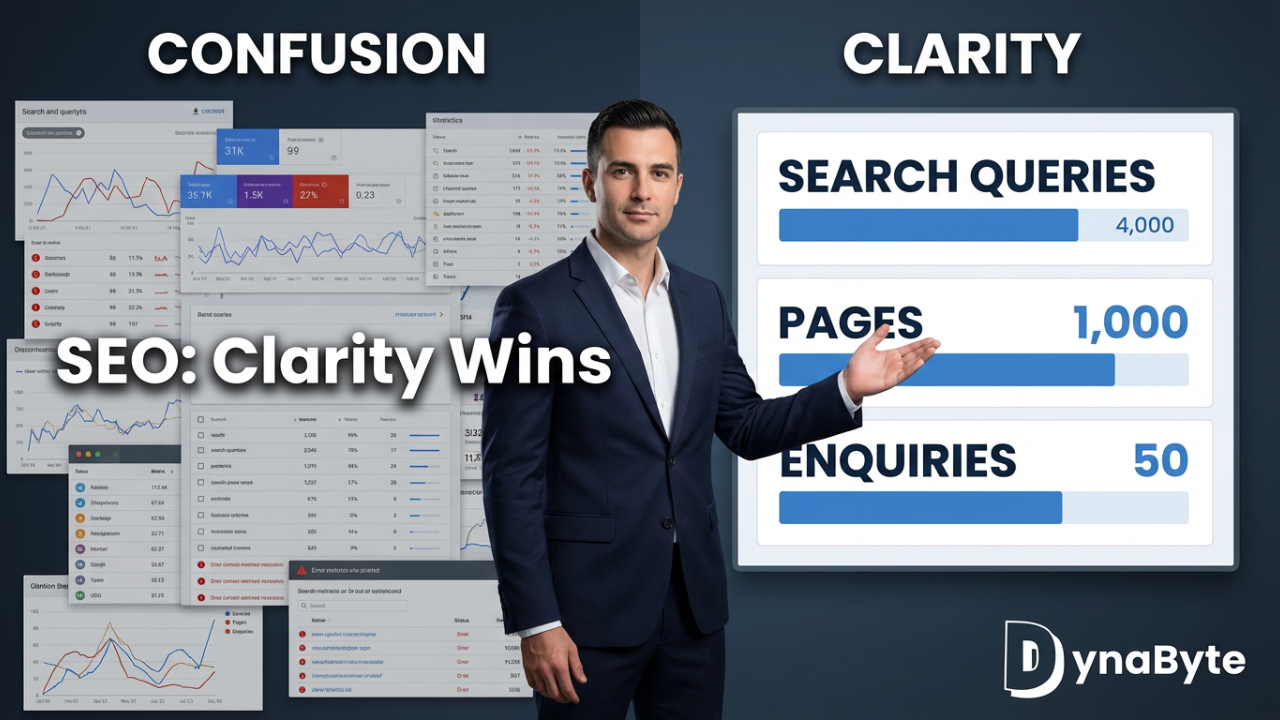
Clarity starts when real search queries, real pages, and real enquiries are connected.
What “working SEO” actually looks like in real life
When SEO works, it rarely arrives with fireworks. Most of the time, it shows up quietly.
You notice people mentioning services you recently added to your site. You get fewer enquiries, but they are more serious. You see pages appearing for searches that describe what you actually offer, not vague curiosity terms.
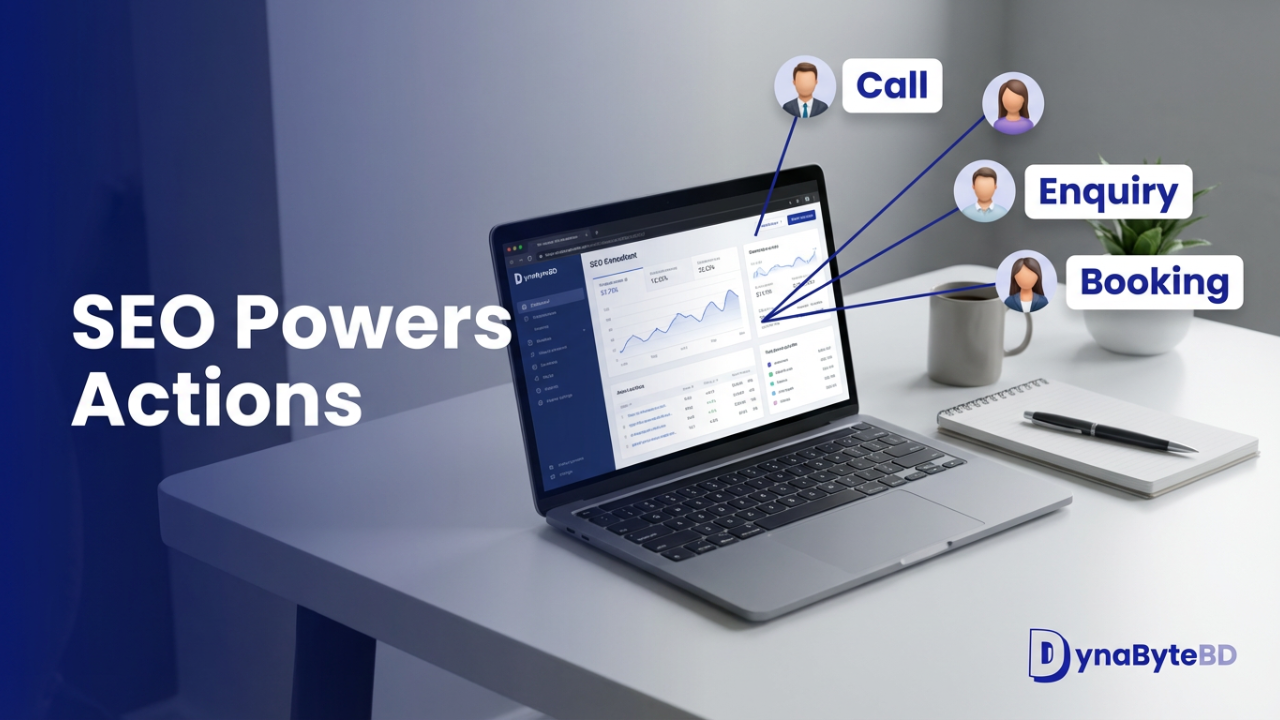
SEO is working when three things slowly line up: You show up more often for relevant searches, the right people click, and some of those people take action.
That action might be a call, a booking, a form submission, or a purchase. The format doesn’t matter. Intent does.
This is why tools like Google Search Console and GA4 matter. Not because they look technical, but because they show what Google is actually doing with your site—you can see this data in action to understand what real progress looks like.
In our broader SEO service, this connection between visibility and intent is always the anchor. Without it, SEO turns into guesswork.
How people get fooled without realising it
Most business owners are not careless. They are busy.
And many SEO reports are designed to reassure rather than clarify.
A common pattern is ranking for keywords that sound impressive but do not bring buyers. Another is celebrating impressions without explaining why clicks did not follow. Another is showing traffic growth from articles no real customer would ever read.
These are not always scams. Often they come from weak strategy or fear of admitting what is not working yet.
But the result is the same.
Progress without impact.
A simple test helps here:
Could I explain, in plain language, how this SEO work is supposed to lead to customers?
If the answer feels fuzzy, something is wrong.
Leads are the anchor that keeps SEO honest
SEO without lead tracking is guesswork.
Not complex dashboards. Not advanced analytics setups.
Just clarity.
When someone arrives from Google, what should they do?
Call you. Book a time. Send a message. Buy something.
That action must be visible somewhere. If it is not, no one can honestly say whether SEO is helping the business.
For local businesses, Google Business Profile data often tells a clearer story than the website alone. Calls, direction requests, and website clicks represent real intent from real people.
For service businesses, even a simple log of enquiries tied back to organic search is enough to reveal patterns over time.
You do not need perfection. You need visibility into cause and effect.
When SEO looks good on paper but does nothing in practice
In most cases, this is not total failure. It’s misalignment.
The SEO work may be improving visibility, but not for searches that lead to buying decisions. Or it may be helping pages that were never designed to convert.
Another common issue is local intent being ignored. A business might rank nationally for informational searches while remaining invisible in its own service area.
This is why SEO must always come back to intent. Not traffic volume. Not keyword count.
Intent.
SEO works when visibility turns into real actions, not just charts.
Sometimes SEO works before it looks impressive
This part rarely gets said out loud.
SEO can be working even when rankings are not dramatic.
You might not be on page one yet. Traffic might look modest. Your main keyword may still feel out of reach.
But leads start to feel different.
People reference specific pages. They ask better questions. They already understand your service.
That is not luck. That is alignment.
Search Console often shows this early. You’ll see impressions for more precise searches. Click-through rates slowly improve. Pages start attracting the right attention.
These are quiet wins. But they are real.
Why many SEO reports fail business owners
The biggest problem is not dishonesty. It is disconnection.
Reports show activity instead of outcomes. Tasks instead of results. Movement instead of meaning.
A useful report should answer three things clearly:
What changed on the site. How Google responded. What that means for the business.
If any of those are missing, the report becomes decoration.
This is why strategy-led work, like what we do through our Local Business Consultancy, focuses less on volume and more on relevance and consequence.
How to judge progress without guessing
SEO does not work on emotion. It works on signals.
Early progress is about foundations. Clean tracking. Clear pages. Correct intent.
Later progress shows up as momentum. Visibility improves where it matters. Engagement strengthens. Leads begin to connect to search behaviour.
If months pass and none of these signals appear, something needs to change. The strategy. The execution. Or the expectations.
Waiting without clarity helps no one.
The one question that cuts through everything
Which searches are bringing enquiries, and which page is converting them?
A serious SEO provider can answer this calmly and clearly.
If the response stays vague or abstract, trust that feeling. SEO should never be mysterious to the person paying for it.
A grounded way to decide if SEO is worth continuing
SEO earns trust the same way anything else does.
By showing cause and effect.
If you can see how the work connects to visibility, and how visibility connects to action, SEO is doing its job even if growth is gradual.
If all you see are charts with no consequences, it is time to pause and reassess.
That is not negativity. It is responsibility.
A calm next step
If you’re unsure about your current SEO, don’t panic and don’t rush.
Ask for clarity. Ask to see real search queries. Ask to see pages tied to enquiries. Ask what is expected to improve next, and why.
If the answers make sense, you are likely on the right path. If they don’t, you now know what questions matter. And that alone puts you ahead of most business owners.
If you want to see how this clarity translates into real-world results, we invite you to explore our case studies—no pressure, just proof of what actually works.
No pitch. No pressure. Tell us about your business and we’ll tell you honestly what we’d focus on first request a free consultation to explore realistic growth in your market.