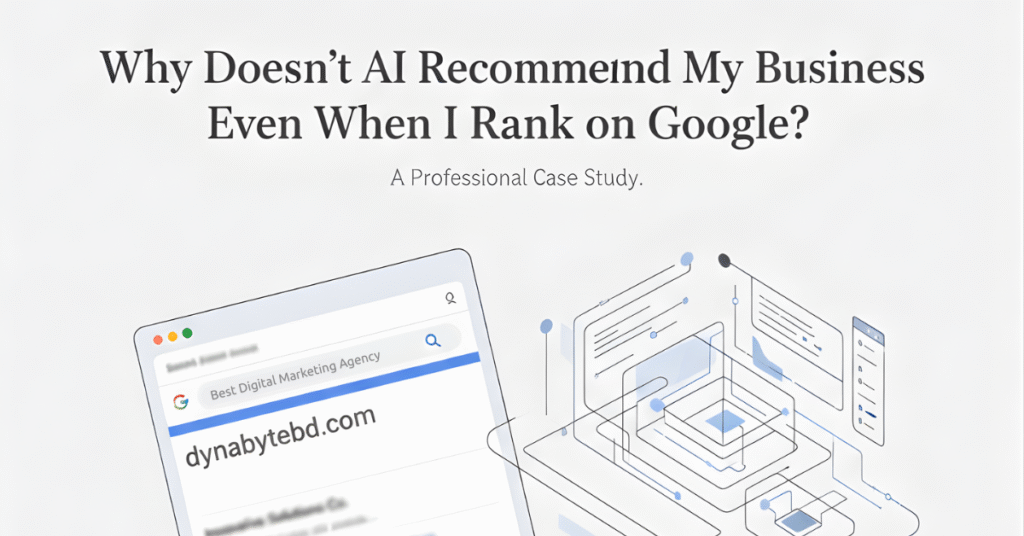
You search your main keywords on Google.
Your site shows up.
Sometimes it’s top three.
Sometimes it’s even number one.
Clients can find you.
Traffic is coming in.
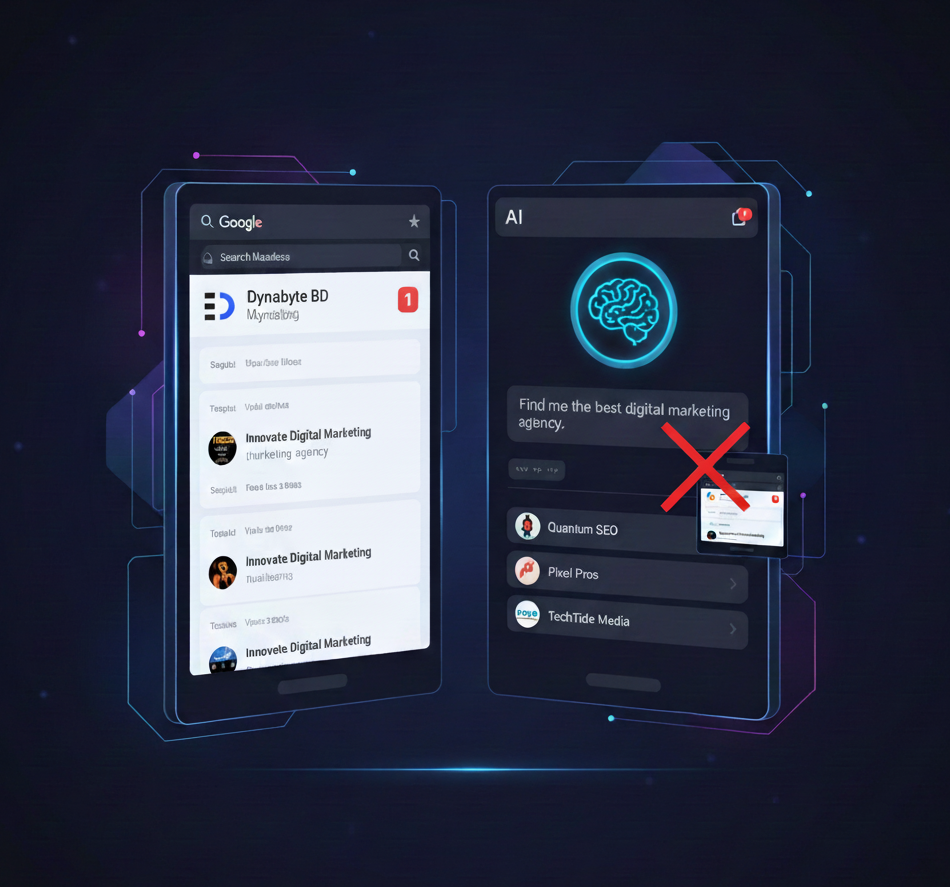
But when people ask AI tools the same question — ChatGPT, Google’s AI Overviews, voice assistants — your business is missing.
No mention.
No recommendation.
And no citation.
This confuses a lot of business owners. For example, it often feels unfair at first. On the surface, it feels unfair.
But here’s the thing.
Because of this, ranking on Google and being recommended by AI are not the same problem anymore.
This case study explains why that gap exists, what we’ve seen across real projects at DynaByte, and what actually changes when AI starts recognizing a business properly.
Google Search still works largely on pages.
Pages rank because:
they match keywords
they have links
they are technically sound
they satisfy search intent
AI systems work differently.
They don’t just look at a page and say, “This ranks, so let’s recommend it.”
Instead, they ask quieter questions:
Who is this business?
Is it real?
Is it trusted across multiple sources?
Is it consistent?
Does it clearly solve the user’s problem?
If the answers aren’t clear, AI stays silent.
That’s why many businesses rank but never get mentioned.
Most SEO strategies were built for search engines that list links.
AI doesn’t list links.
Instead, it answers questions.
However, that difference matters.
When AI responds, it doesn’t want to hedge.
It doesn’t want to guess.
It prefers sources it understands deeply.
If your business feels fragmented or unclear, because of this, AI avoids it even if Google ranks you.
This isn’t punishment.
It’s caution.
In practice, AI systems rely on repeatable patterns, not rankings alone.
Google itself hints at this shift through its guidance on
helpful, people-first content
.
Because of this, the takeaway is simple.
AI doesn’t reward clever SEO.
It rewards clarity.
We see these patterns again and again.
1. The business has no clear “about” identity
The site talks about services but never explains who the business is, who runs it, or why it exists.
2. Service pages are keyword-driven, not explanation-driven
They rank, but they don’t explain.
3. Inconsistent business information
Different names, service descriptions, or locations across the web.
4. Weak off-site confirmation
No strong mentions beyond the website itself.
5. No structured data or entity signals
AI struggles to connect the dots.
Each issue alone seems small.
However, together, they make AI hesitant.
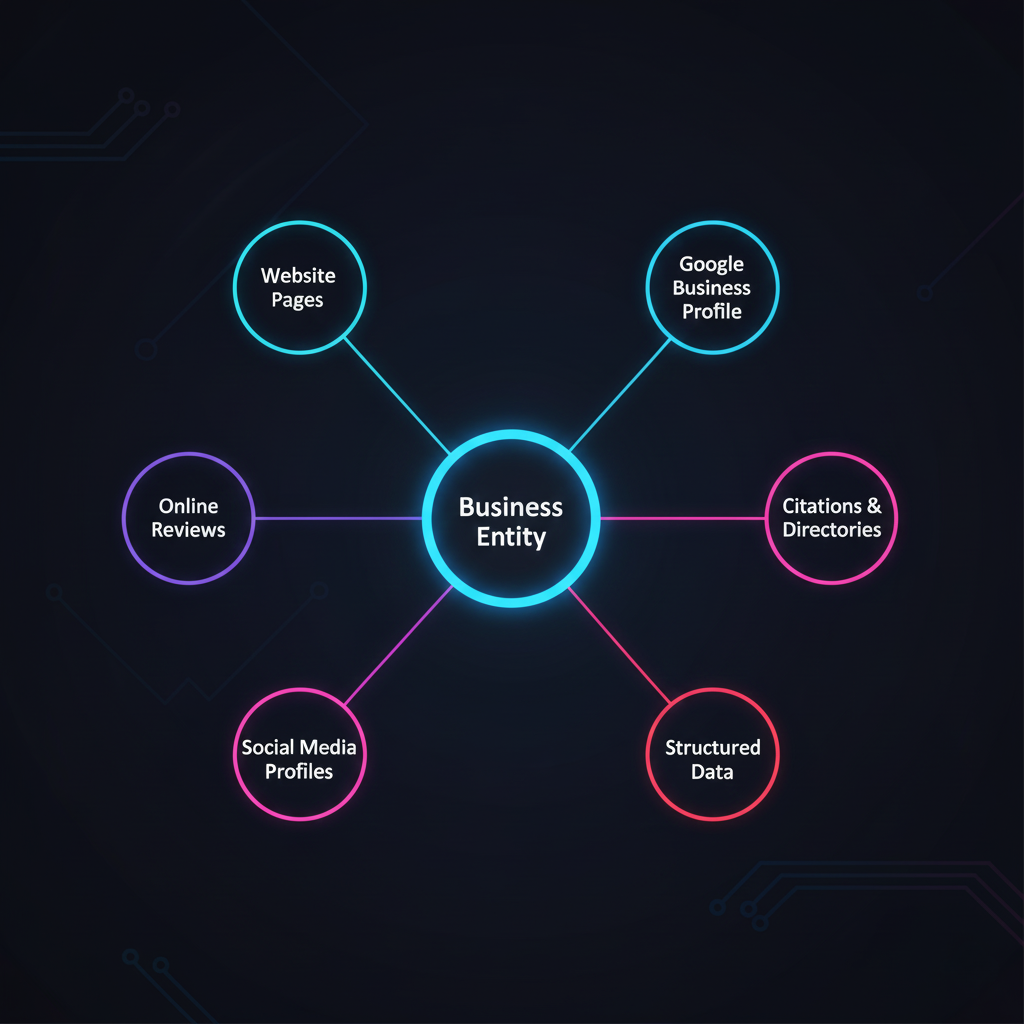
Because of this, entity-level clarity becomes critical.
Entity SEO focuses on answering one core question clearly:
What exactly is this business?
Not just what it ranks for. Not just what it sells. But who it is in the real world.
This aligns closely with how Google’s Knowledge Graph works.
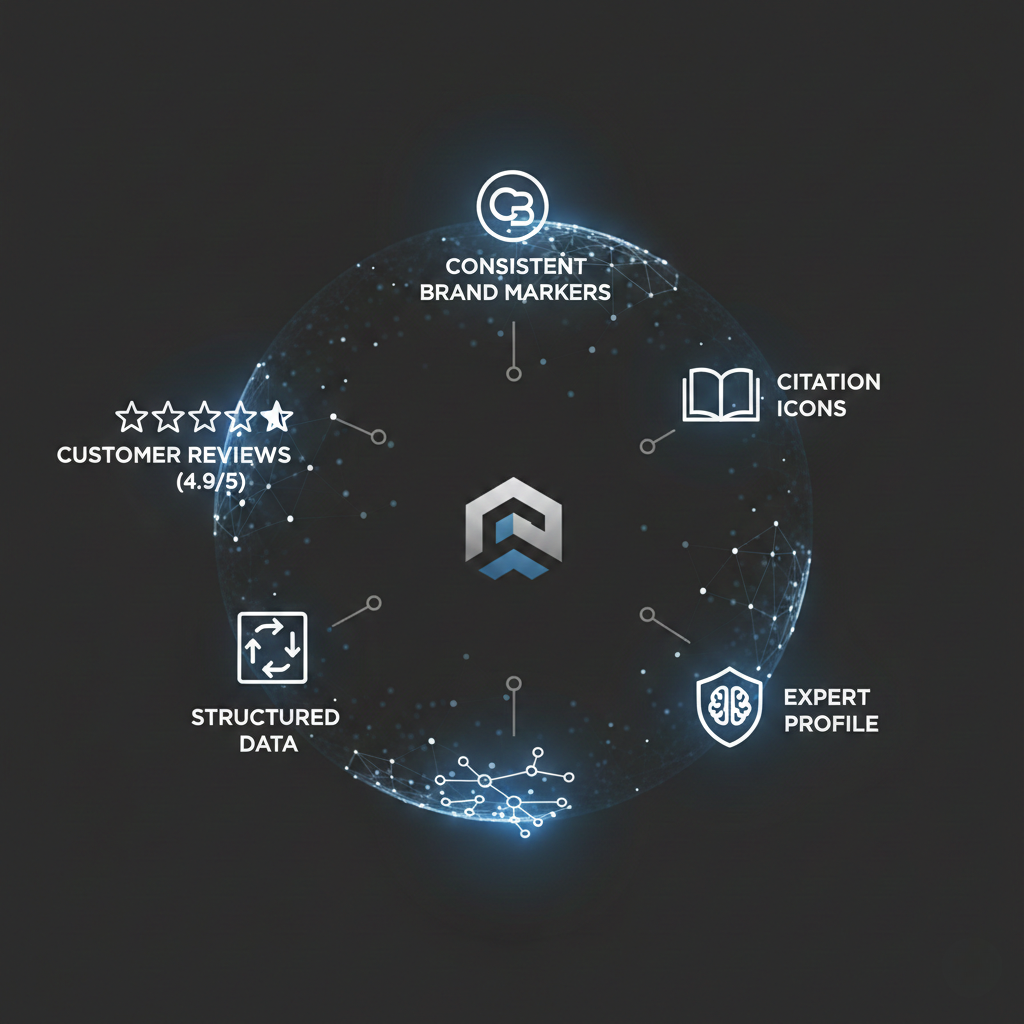
When entity signals are strong:
When entity signals are weak, AI avoids commitment.
Across multiple service businesses we’ve worked with, the pattern is consistent.
Before:
good keyword rankings
decent traffic
no AI visibility
After:
clearer About page
refined service explanations
consistent business data
structured information
stronger brand mentions
As a result, suddenly:
AI summaries start referencing the brand
voice search pulls their name
AI answers stop skipping them
No hacks.
No shortcuts.
Just alignment.
As a result, AI often favors consistency over creativity.
This part surprises people.
AI often prefers businesses that feel boring.
Why?
The reason is simple: boring businesses are consistent.
They:
explain the same services the same way
use the same language everywhere
don’t exaggerate
don’t shift positioning constantly
AI trusts repetition.
It does not trust novelty.
A flashy brand with unclear messaging confuses AI more than a simple brand that repeats itself clearly.
In other words, not all visibility signals work the same way.
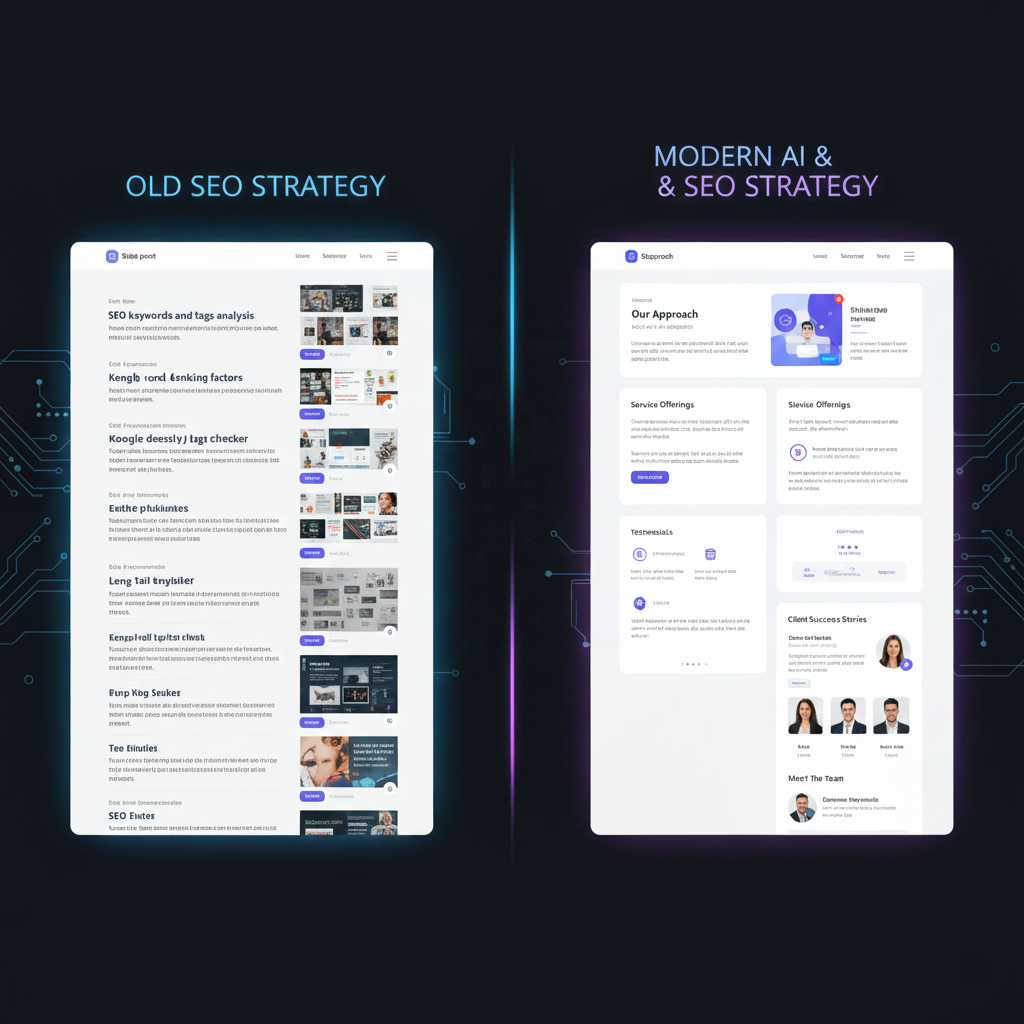
Ranking content often focuses on:
headings
keywords
structure
optimization
AI-trusted content focuses on:
explanation
context
completeness
intent resolution
In other words, the best results happen when content does both.
This is why thin pages struggle with AI even if they rank.
Google Business Profile matters more than many people realize.
It’s one of the strongest confirmation sources for:
Google itself explains its importance clearly in its
official Business Profile guidelines
.
Therefore, when GBP data is incomplete or inconsistent, AI confidence drops.
When it’s strong and aligned with the website, AI trust improves.
AI systems are conservative by design.
They don’t want to:
recommend the wrong business
misattribute expertise
give unclear advice
So when signals are mixed, they choose silence.
That silence feels personal to business owners.
But it’s actually procedural.
From real observation, not theory:
Not hype. Not buzzwords. Not tricks.
This aligns with OpenAI’s own guidance , which emphasizes reliability and clarity over persuasion.
That principle shows up clearly in how AI systems decide which businesses to recommend.
Search is changing.
People are asking full questions.
Because of this, they want direct answers.
As a result, they trust AI summaries more each month.
Because of this, if your business is invisible at that layer, rankings alone won’t protect you long-term.
This doesn’t mean SEO is dead.
It means SEO has grown up.
For example, search behavior has already started shifting.
If your business ranks but AI ignores you, the issue is not performance.
It’s definition.
As a result, once a business is clearly defined, consistently presented, and well-explained, AI behavior changes naturally.
No chasing algorithms.
No panic moves.
Just clarity.
We Make SEO & Branding Simple.
More visibility, better rankings, and real growth—without the guesswork.No fluff, just solid SEO and branding that actually works.
🇨🇦 Canada Office Address:
3798 Lawrence Ave E, Scarborough, ON M1G, Canada.
🇧🇩 Bangladesh Office Address:
Tukerbazar, Sylhet 3100, Bangladesh.